Saturday, March 19, 2011

How It Works


Walls (Circus)

Chorus:
Some days are diamonds
Some days are rocks
Some doors are open
Some roads are blocked

Sundowns are golden
Then fade away
But if I never do nothing
I'll get you back some day, 'cause

[Chorus:]

You got a heart so big
It could crush this town
And I can't hold out forever
Even walls fall down

All around your island
There's a barricade
That keeps out the danger
That holds in the pain

Sometimes you're happy
Sometimes you cry
Half of me is ocean
Half of me is sky, but

[Chorus]

Some things are over
Some things go on
Part of me you carry
Part of me is gone, but

[Chorus]

[Chorus]

Wiki says:
Thomas Earl "Tom" Petty (born October 20, 1950) is an American singer-songwriter and multi-instrumentalist. He is the frontman of Tom Petty and the Heartbreakers and was a founding member of the late 1980s supergroup Traveling Wilburys and Mudcrutch. He has also performed under the pseudonyms of Charlie T. Wilbury, Jr. and Muddy Wilbury.
He has recorded a number of hit singles with the Heartbreakers and as a solo artist, many of which remain heavily played on adult contemporary and classic rock radio. His music, notably his hits, has become popular among younger generations as he continues to host sold-out shows. Throughout his career, Petty and his collaborators have sold 60 million albums.

Petty and his band the Heartbreakers celebrated their 30th anniversary with a tour in 2006

I saw Tom interviewed on some show not too long ago and was truly impressed with his brightness and his humanity. I am not surprised that he is frontman to a band with over thirty years hanging together. He projects a solid character. That's a pretty good job Tom has. I guess he's a pretty good man for the job.

How It Works

I turned the corner,
rounded my jagged outer
wall to find the small
hole I started once.

I found you already there,
chipping away from
your side. Amazing.

November 9, 2009 5:12 AM

Friday, March 18, 2011

Adam's Sacrifice - Reprise

The Creation Of Adam


This poem glances off the myth that informs one facet of my spiritual walk. I say of my life that it is a gesture of witness. I am not gathering witness of everything but only of certain things aimed at a kind of legal argument, something like that. Not really legal but as if I was an attorney gathering for an upcoming arqument and this with no less than God as the judge. As if I could ever win... But still, it is intensely important that I present the human side. That of course is the witness, the human side of the thing.

It is so beautiful here, such a wonderful chance. It is beyond belief the miracle and all that. But it is matched and more by the pain and loss. The price is too steep. That the Buddhist first principle has to be "all life is suffering", that is too much, too big. That you or I or anyone can decide that it is all too much and decide to quit in some way, that you or I or anyone really cannot be blamed even as we withdraw from such a person to protect ourselves or they withdraw to be free of persecution, all this is too steep a price. That is the argument, that it costs too much here.

Adam's Sacrifice

That you should require
My separation from you
Is what baffles me.
It feels bleak and hard
That I must walk out the door.

I know I started
This situation in truth
By my argument
And I think I'm right
But still, what a steep deep price.

And on top of it,
At the high capstone,
You want me to do this thing
As if willingly.

January 7, 2009 11:51 AM
First Posted, May 28, 2009


As I say, this is a myth and only one side of spiritual things for me. I deeply honor the Bodhisattva ideal also:

Guanyin, Bodhisattva of Compassion


Wiki says: Guanyin is the bodhisattva associated with compassion as venerated by East Asian Buddhists, usually as a female. The name Guanyin is short for Guanshiyin which means "Observing the Sounds (or Cries) of the World". She is also sometimes referred to as Guanyin Pusa (simplified Chinese: 观音菩萨; pinyin: Guānyīn Púsà; Wade–Giles: Kuan-yin Pu-sah; literally "Bodhisattva Guanyin"). Some Buddhists believe that when one of their adherents departs from this world, they are placed by Guanyin in the heart of a lotus then sent home to the western pure land of Sukhāvatī.

It is generally accepted (in the Chinese community) that Guanyin originated as the Sanskrit Avalokiteśvara (अवलोकितेश्वर), which is her male form. Commonly known in English as the Mercy Goddess or Goddess of Mercy, Guanyin is also revered by Chinese Taoists (sometimes called Daoists) as an Immortal. However, in Taoist mythology, Guanyin has other origination stories which are not directly related to Avalokiteśvara.

Thursday, March 17, 2011

My Hopes Shiver - Reprise


Elena Dudina, a Spanish woman with a Russian soul...she is a master at photo manipulations and embellishments, creating stunning works of art, generally of remarkably beautiful women. I see deep feminine strength in this work, which appears to have been created quite recently.

Elena, I tried to leave you a message at deviantArt that I was taking this one. In some kind of strange way I am grateful for your skill. That makes no sense but there it is. You have treated me kindly in the past. I trust your life is going very well. I certainly hope for that.

To the rest of you, this is copyrighted material. Behave accordingly, please.

See Elena's work here


The women I like are strong women...little wonder with the mother I grew up with. I understand the special challenge that biology gives to women, and I am fairly interested in all the different ways they try to solve the conundrum of children and career, for example, or the simpler but still difficult issue of marriage itself. My last lover left me, I believe more to stay single than to leave me. At least she said so often enough. And yet in doing so she took on another different sort of relationship aimed at giving a young and talented man a chance to thrive. She adopted a young Mexican illegal who just happened to be an amazing baritone with a yearning for opera. Then they worked out solutions and what happened, he was able to go to Canada with her as she emigrated. In doing so he was able to surface and become legal. So now he can't come back to the States but he is legal going to school for his opera in Vancouver. This took most of two years to set up. She has a singular and unique path. So do her children. One has ties to Japan and a Japanese wife. Her daughter got a Masters at the London School of Economics and has worked for Prince Charles, in a charitable organization involved with consulting with cities and other large scale organizations concerning green spaces and how to get them incorporated into the landscape. That daughter had already spent a semester at university in France and graduated from the University of Oregon in Eugene.

Ann, my wife of twenty years was arguably among the best cross cultural specialists in child welfare in the state of Oregon before she crashed. What a tragedy her loss was...she raised a couple kids in the course of her work, both girls. One of them was totally institutionalized when she took her on, deemed hopeless, but Ann worked hard and eventually that kid became a dental technician and survived easily on her own. The other kid was born to street gutter drunks. She took that kid and engineered a life that led to a higher math degree at Yale and a 100k a year job out of the gate after graduation. Neither of these kids could have done it without Ann. There were of course many others.

My mother graduated from the University of California at Berkeley Phi Beta Kappa and Cum Laude and was valedictorian of her graduating class, sharing the podium at graduation with Harry Truman, who was then President of the United States. She turned down a movie career to go to school. In the last half of her life, she became a published author, a minister in Unity School of Christianity, and set up a training track for Unity ministers to stay in the field and meet the requirements of a Unity degree and license to practice. Prior to her time, all ministerial students were required to go to Unity Village to university there in order to be ordained as Unity Ministers, and that left many aspirants with no way to succeed. Her book, Handbook of Positive Prayer has become a training manual and classic in the Unity library of books. It stays in print long past her death. She received the Myrtle Filmore award for excellence and lifetime achievement and was Minister Emeritus (retired) and had the title of Chaplain to the local Unity ministers at the time of her death near 80. She still worked a little in the last year of her life, and she was highly active with Amnesty International as a letter writer and agitator protesting political prisoners.

All that was after accomplishments as actress and director of plays and a strong career as a high school teacher of English. She also had an opera quality soprano voice when she was young and still in middle age. She and I (and my sister too) all sang in the same church choir when I was in high school. That choir was remarkable and the choir master was dean of the San Jose State school of music. It had four professionally trained voices to anchor each section and these people and the organist were paid performers, soloists.

My Hopes Shiver

If you would hold still
Then I could touch you just so
And we would rise up
As if we had wings.

You insist on your freedom
And my hopes shiver,
Come apart at seams
I didn't know could be there.

You aren't what you seem.
I have to admit
I'm not either. I am less
Without your magic.

January 4, 2009 10:45 AM
This poem and the core of this post was published May 20, 2009.
The stuff about my mother was added tonight.

Wednesday, March 16, 2011

Why You Should Write - Reprise

The Scribe's Refreshment


From the Guardian, UK:


James Frey ignores publishing houses to release new book

through art gallery

Bad boy of American letters prints just 10,000 copies of
his latest work, The Final Testament of the Holy Bible, in
time for Easter

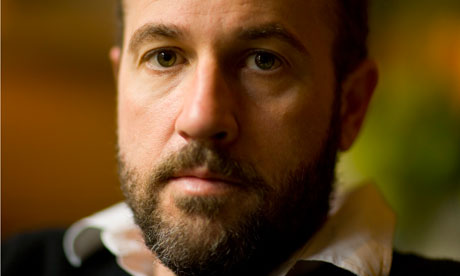
James Frey
James Frey: ‘I tried to write a radical book; I’m releasing it in a radical way.’ Photograph: Antonio Olmos/ Antonio Olmos

These are tough times for the publishing industry, so writers are increasingly turning to unconventional ways to market their work.

There is the horror story printed on toilet paper, the novel composed of 2,000 tattoos etched on volunteers’ skin, the unbound book in a box that can be shuffled and read in any order, and of course the numerous collaborative Wikinovels.

Now the bad boy of American letters, James Frey, has jumped on the bandwagon with the announcement that his next book will be published by an art gallery. Just 10,000 copies will be printed on paper, with an additional collectors’ edition of 1,000 signed volumes.

Frey’s original manuscript will be printed on canvas and displayed by the publisher, the Gagosian gallery in New York, alongside new artworks by several top American artists to illustrate it. They include Richard Prince, Ed Ruscha, Richard Phillips and Terry Richardson.

Posted today at Jim's website, bigjimindustries


Back in October of 2009, I was reading Bright Shiny Morning, by James Frey. I am nearly done. What a gem. In the back of that book is an essay Jim entitled Music and Talking. He points out that he nearly always writes to loud music in the background. He points out that he always talks first what he writes and that if you talk you will see that language is only partially guided by grammar and mainly guided by context. Thus because he seriously writes as he speaks, he tends to write without many grammatical conventions, which do not show up in speech. He doesn't say, but he knows he should write. I know I should write.

Why You Should Write

The writing you do
reveals the design not yet
in God's world until
your hands and heart place
it precisely, a jewel.
That is what you do.

February 16, 2009 8:28 AM
First posted, October 6, 2009

Tuesday, March 15, 2011

Finding The Balance - Reprise


"People seem not to see that their opinion of the world is also a confession of character." - Ralph Waldo Emerson

Ralph Waldo Emerson (May 25, 1803 – April 27, 1882) was an American lecturer, philosopher, essayist, and poet, best remembered for leading the Transcendentalist movement of the mid-19th century. He was seen as a champion of individualism and a prescient critic of the countervailing pressures of society, and he disseminated his thoughts through dozens of published essays and more than 1,500 public lectures across the United States.

"The bottom line is that (a) people are never perfect, but love can be, (b) that is the one and only way that the mediocre and vile can be transformed, and (c) doing that makes it that. We waste time looking for the perfect lover, instead of creating the perfect love."

Still Life With Woodpecker
- Tom Robbins


"Only mediocrity can be trusted to be always at its best." - Max Beerbohm

Sir Henry Maximilian "Max" Beerbohm (August 24, 1872 – May 20, 1956) was an English essayist, parodist and caricaturist best known today for his 1911 novel Zuleika Dobson.


Finding The Balance

I am here again,
Trying to figure it all,
Trying to square things.

I know I'm not all alone,
That others wish to balance
The ball precisely.

The perfect poem won't fit
In the perfect life.

January 6, 2009 9:57 AM
First published May 25, 2009

Monday, March 14, 2011

Written In The Dead Of Night


Written In The Dead Of Night

Just when I thought you
impossible, you changed me
and I saw the light.

So I say in my
own Puckish way, arrival
is a dialogue,
multiplicity,
cross of numbers and changes,
and I confuse my
true solitude with
lost empty separation.

Yes? I ask, and Yes!
you answer in time,
yes in rhythm, and in rhyme.

November 4, 2009 2:58 AM

Oh my, I wonder, perhaps an acid flashback? I admit I can still exactly remember the taste of burning cigarette tobacco and paper when I am high on LSD. (I quit smoking in 1981 and used my last LSD in 1970.) There are other things too that I remember. The key pieces, though, I cannot exactly remember. They do not fit in my ordinary mind. I remember that I had the experiences. I remember some of the stories but not even all of them. However, I am not the only guy who can have deja vu all over again, stark raving sober. I know I am not the only guy. Back in the day, I aimed for that. I aimed to replace my ordinary mind with a fey mind, a mind with the energy of LSD running through it, with all the wild phenomena that can and does happen to some of us. They happened to me. I very much wanted to keep all that close. I was deeply disappointed when LSD turned on me and I tried to turn it back for a while before deciding I could not use it again.

Sunday, March 13, 2011

Stripped Naked - Reprise


"To be a good human being is to have a kind of openness to the world, an ability to trust uncertain things beyond your own control, that can lead you to be shattered in very extreme circumstances for which you were not to blame. That says something very important about the condition of the ethical life: that it is based on a trust in the uncertain and on a willingness to be exposed; it's based on being more like a plant than like a jewel, something rather fragile, but whose very particular beauty is inseparable from that fragility." - Martha Nussbaum

Martha Nussbaum (born Martha Craven on May 6, 1947) is an American philosopher with a particular interest in ancient Greek and Roman philosophy, political philosophy and ethics.

Nussbaum, though not a lawyer, is currently Ernst Freund Distinguished Service Professor of Law and Ethics at the University of Chicago, a chair that includes appointments in the Philosophy Department, the Law School, and the Divinity School. She also holds Associate appointments in Classics and Political Science, is a member of the Committee on Southern Asian Studies, and a Board Member of the Human Rights Program. She previously taught at Harvard and Brown where she held the rank of university professor.

"The fishermen know that the sea is dangerous and the storm terrible, but they have never found these dangers sufficient reason for remaining ashore." - Vincent van Gogh

Vincent Willem van Gogh (30 March 1853 – 29 July 1890) was a Dutch post-Impressionist painter whose work had a far-reaching influence on 20th century art for its vivid colors and emotional impact. He suffered from anxiety and increasingly frequent bouts of mental illness throughout his life and died, largely unknown, at the age of 37 from a self-inflicted gunshot wound.

Little appreciated during his lifetime, his fame grew in the years after his death. Today, he is widely regarded as one of history's greatest painters and an important contributor to the foundations of modern art. Van Gogh did not begin painting until his late twenties, and most of his best-known works were produced during his final two years. He produced more than 2,000 artworks, consisting of around 900 paintings and 1,100 drawings and sketches

***This is a dream sequence. I am not so thin as I sit here pondering the state of things. I am also not old before my time. So this is a story poem, about someone, not about me directly. Yet, there is the suddenness of a heart event or two in my life and as well some other sudden things, so it is not as if this poem is made from pure imagination.

A spiritual encounter can be sudden and extreme, like a lightning strike. In certain Zen Buddhist lineages the master will use a bamboo cane as a striking tool. As one sits, one can fade, go adrift and the sudden strike of the bamboo will give the passage back to center. Sometimes that sudden return will yield the success one came to meditation to receive.

Stripped Naked

My stark lightning bones
Are thin, and look quite fragile
Reaching for heaven.

I was stripped naked
By a mighty wind
While sure I should stand my ground.

Then you come along,
Take my last picture
Before I fall down silently,
Old before my time.

January 6, 2009 9:15 AM
First posted May 24, 2009

Saturday, March 12, 2011

You Promised Me


"Do unto others 20% better than you would expect them to do unto you, to correct for subjective error." - Linus Pauling

Linus Carl Pauling (February 28, 1901 – August 19, 1994) was an American chemist, peace activist, author and educator. He was one of the most influential chemists in history and ranks among the most important scientists of the 20th century. Pauling was among the first scientists to work in the fields of quantum chemistry and molecular biology.

Pauling is one of only four individuals to have won more than one Nobel Prize. He is one of only two people awarded Nobel Prizes in different fields (the Chemistry and Peace prizes), the other being Marie Curie (the Chemistry and Physics prizes), and the only person awarded two unshared prizes.

"The biggest mistake is believing there is one right way to listen, to talk, to have a conversation -- or a relationship." - Deborah Tannen

Deborah Frances Tannen (born June 7, 1945) is an American academic and professor of linguistics at Georgetown University in Washington, D.C.. She has been McGraw Distinguished Lecturer at Princeton University and was a fellow at the Center for Advanced Study in the Behavioral Sciences following a term in residence at the Institute for Advanced Study in Princeton, NJ. Her major theoretical contribution is a poetics of conversation. She showed in her academic work that everyday conversation is made up of linguistic features such as repetition, dialogue, and imagery, that are traditionally regarded as literary.

Tannen has also written several general-audience books on interpersonal communication and public discourse. She became well-known in the United States after her book You Just Don't Understand - Women and Men in Conversation was published in 1990. It remained on the New York Times best seller list for nearly four years (8 months at No.1) and was subsequently translated into 30 other languages.

I see the situation in my poem like a parent to a child perhaps, like a child knowing the patterns, when dad or mom just says shit to get past it, thinking they know the child will not remember after a bit, themselves reading the patterns, only this time the game is different, is no game at all. I have had this experience. Haven't you? This is one of the daily ways of love in the long haul. Love is full of stars and shattered stones, promises and shallow places. We can fly. We can fall. God willing we shall do this all together in the open. God willing we will love each other with full hearts today and tomorrow.

You Promised Me

You gave a promise.
You said I could pick a star
and we would go there
the moment, even
right now should I falter, fall,
and cut myself on
shards, your shattered stones.

You promised me this journey
thinking surely I
was not serious.

October 31, 2009 8:52 PM

Friday, March 11, 2011

Barking At The Grinning Moon - Reprise


"A barking dog is often more useful than a sleeping lion." - Washington Irving

Washington Irving (April 3, 1783 – November 28, 1859) was an American author, essayist, biographer and historian of the early 19th century. He was best known for his short stories "The Legend of Sleepy Hollow" and "Rip Van Winkle", both of which appear in his book The Sketch Book of Geoffrey Crayon, Gent.

Irving, along with James Fenimore Cooper, was among the first American writers to earn acclaim in Europe, and Irving encouraged American authors such as Nathaniel Hawthorne, Herman Melville, Henry Wadsworth Longfellow, and Edgar Allan Poe. Irving was also admired by some European writers, including Sir Walter Scott, Lord Byron, Thomas Campbell, Francis Jeffrey, and Charles Dickens. As America's first genuine internationally best-selling author, Irving advocated for writing as a legitimate profession, and argued for stronger laws to protect American writers from copyright infringement.


"Grace must find expression in life, otherwise it is not grace." - Karl Barth

Karl Barth (May 10, 1886 – December 10, 1968) (pronounced "Bart") was a Swiss Reformed theologian whom critics hold to be among the most important Christian thinkers of the 20th century; Pope Pius XII described him as the most important theologian since Thomas Aquinas. Beginning with his experience as a pastor, he rejected his training in the predominant liberal theology typical of 19th-century European Protestantism.

Instead he embarked on a new theological path initially called dialectical theology, due to its stress on the paradoxical nature of divine truth (e.g., God's relationship to humanity embodies both grace and judgment). Other critics have referred to Barth as the father of neo-orthodoxy — a term emphatically rejected by Barth himself. The most accurate description of his work might be "a theology of the Word." Barth's theological thought emphasized the sovereignty of God, particularly through his innovative doctrine of election.

When I encounter events in the spiritual life I press so hard against the edge of me that I wonder if I can move at all sometimes. There is something about seeing with the eyes of God. That resolves some paradoxes. However living today as I am, another bozo on the bus, all I get is that the paradoxes do resolve. Trust me on this.

Right.

There are no answers here, not real answers. There are dogmas, tenets, assertions. There is faith. If you try to hold one horn of the dilemma and then try to stuff the other in beside it, it won't fit until the other falls out. It's the shape of the mind, not even really the size of it that's the trouble. The paradox would fit if it was shaped more humanely or the mind shaped closer to God's shape.

There are something like higher dimensions involved. Those words do not have the right shape either...not higher dimensions, not in the scientific sense but yet these words evoke how the infinite is present in mortal life. So we say that eternity lies at right angles to spacetime and that has to suffice.

Barking At The Grinning Moon

Without God I'm fucked,
Without free will, this also
Screws me to the wall.

There is no matter
More important than my time
And what I might do
Yet nothing's required.
God, how shall I reconcile
Me with paradox?

If you think I know
The answers, then you're barking
At the grinning moon.
He taught me this truth:
It's the questions that move worlds.
Answers will kill them.

January 5, 2009 2:20 PM

This is the second half of yesterday's reprise, first posted May 23, 2009.

Thursday, March 10, 2011

Seeking God Himself - Reprise

Green Flames


"Religion often gets credit for curing rascals when old age is the real medicine."

"The hardest fact in the world to accept is the inevitable mixture of evil with good in all things." - both attributed to Austin O'Malley, b. 1858 - d. 1932

This poem was written over two years ago, written in the winter before my first heart event. In those days they found two clogged veins and fixed one, using a stent to hold it open. In those days I had no atrial fibrillation, no ventricular hesitations, no apparent thickened heart muscles creating stiffened diastolic response, a heart failure that won't kill me of itself but is very good at making me feel awful quite often and very likely to help me stroke out.

I have to deal with turkeys. I am schmoozing my Warfarin clinic nurse to get her to see things my way. She is far too conservative and as a result my warfarin number is way too high. That can lead to really bad bleeds if I should pop something somehow. But I don't want to piss her off. She is an essential team player. The phlebotomy team at the local lab is terrible at finding my veins. But the lab over by my work is batting one thousand. Local turkeys revealed by distant competence. I have to give blood samples twice a week at this point.

This is the heaviness of living with my own death. That is close and present even if I still have twenty years. My mother had something like ten years past her first heart event, but it was much bigger than mine. I am living with lung trouble daily right now but it is not really lungs, it is the backup of blood at my lungs because my heart doesn't move the blood well.

I am not saying these things to get sympathy, which they say you can find between shit and syphilis in the dictionary. I am pointing out that any spirit filled life that is true does not hesitate on this threshold. There is somewhere in me that is just fine right now even as I cough so hard I faint sometimes and have to sleep sitting up in a chair.

Note. Sitting up in a chair is one recommended posture for people in overt heart trouble...they say do not lie down while waiting for the medics. They say remain standing or sitting upright as best you can. I tie that recommendation to this sleeping posture I must take. I really can't lie down right now and may never be able to again. That's not good for the edema in my legs, also part of this trouble of course.

Seeking God Himself

I carry this weight
Doing my part as you do
Accepting the chill.
At the edge of me
Is the bud waiting for spring,
Then to swell, intense,
Ready to burst with
Green flames, to look for lifemates,
To seek God Himself.

January 5, 2009 9:00 AM

To burst with green flames...a solution to heart pain. <== Look at that! :D That sentence was written in the original post.

First posted May 23, 2009

Wednesday, March 9, 2011

Hot Leads - Reprise

Michael Keaton as Beetlejuice

Michael John Douglas (born September 5, 1951), better known as Michael Keaton, is an American actor, well known for his early comedic roles in films such as Night Shift, Mr. Mom, Johnny Dangerously, Beetlejuice, and for his dramatic portrayal of Batman in Tim Burton's Batman and Batman Returns, as well as lead roles in other films including The Paper, Jackie Brown, Jack Frost, White Noise, Cars, The Other Guys and Toy Story 3.

I think I looked a little like Michael at one point.

I have direct experience of altered states. It was a long time ago, November, 1966. It was also not fun. I did not do drugs for fun, not after this certain change, this turning point. At the moment of the change, something else happened. This was not only LSD. I have been working hard ever since, casting out what needs to go, keeping what needs to be kept. I share what I know by writing poems among other things. Here is one side of the experience. If encountering raw spirit is much like grabbing hot electrical leads, then one could surmise some things.

A spiritual event is not always like that. The encounter with spirit can be amazing and easy, peaceful, full of love, and the first of the two that happened to me was just like that. But it can also be a dangerous matter, and the continuation a couple days later blew my mind out. The Bardo Thodol was written as a guide for Tibetans who might enter demonic realms in their spiritual passage. And more. Because the wise will point out that the bliss of spirit can be even more dangerous, entrapping a soul short of the mark.

The biggest thing to know because raw spirit can burn you, get a guide. Also, if there is such a thing as insulation, then get some of that too. Another thing to know, if spirit is stronger than you, then beef up. These images have actual counterparts in the spiritual disciplines, all of which offer techniques and living conditions, teachers and communities which offer protection and training. The only reason to strike out into the spiritual wilderness without discipline, training, guidance, fellowship, tradition and practice would be a direct call of spirit to do it, or as happened to me, by "accident", meaning spirit comes to you.

But that accident was no easy thing. Destined or not, I nearly paid with my life, also with my sanity. The next thing that happened to me was four months in an institution and two more years in exile and on antidepressants, and at least some of that really needed. I have journals from that time. It is amazing to me that I have this double vision. I know I did not feel depressed. I was really excited, chasing spirit, hoping to learn what happened to me, and being convinced it led further than my insides into direct connection with what was central and happening in the world. Even though all this excitement and dedication was true then and now, when I read those journals, I read the work of a depressed young man. Wow.

Hot Leads

I asked if I'll snap
Stretched like this. You said, "Maybe".
That's just friggin fine.

I've been here before,
Took me years to untangle
And stitch a new seam.

This spiritual stuff gets me
All riled up, hair stands on end.

Like grabbing hot leads
And power searing my soul,
I just can't let go.

January 4, 2009 9:14 AM
First Posted Tuesday, May 19, 2009

Tuesday, March 8, 2011

Hard Pressed


"I wish I could show you when you are lonely or in darkness the astonishing light of your own being." - Hafiz of Persia


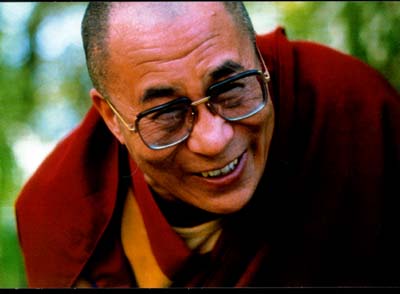
This morning (meaning the morning that I wrote this poem) I read a passage from The Path To Bliss written by the Dalai Lama in which he points out that the universal only appears in particulars in our experience, that this applies to teachers and students of awakening as much as anyone else. Thus the presence of God Incarnate on the planet, even that, is ever and always deniable by those who cannot see. He points out that the message delivery, being particular even if the message is perfectly universal, can only succeed with those already prepared to receive it in just the way it is given. He calls this preparation the karmic bond between souls.

That is why there must be many teachers of enlightenment. It is not enough that I am ready to receive, in itself miraculous. As well there must be a teacher or a teaching intimate enough that the message would seem to rise up from within me, as if a memory.


Hard Pressed

He cast his salt on
the seasons of nearby souls,
knowing only some
would receive from him,
those who have traveled in his
company, dancing
with him through ages.

Though my heart's universal
my armor is stone,
my salt has true grit,
and I'm hard pressed against my
limited presence.

October 31, 2009 7:33 AM

Listening To Trees


Here’s a wonderful idea by Joseph Cornell, author of Sharing Nature With Children:

If you listen carefully with a stethoscope, you can hear the “heartbeat” of a tree. Find a thin-barked tree more than 6 inches in diameter and place your stethoscope against its trunk. Be very quiet. Move the stethoscope around until you can hear the crackling, gurgling sound of sap flowing up to the branches.

- Listening to Trees


How To Listen To Trees Communicate

1 Surround yourself in a silent environment with plenty of trees and foliage.

2 Be prepared to stay for a long while. Trees are very noble and peaceful. They neither welcome the bird nor beckon for its return. They let things be as they are. Therefore, they won't welcome your willingness to listen, they'll only see you as you are and continue with their normal behavior.

3 You should treat the trees with respect. As you meditate, make sure your respect is noticed. You are sure to be able to hear more clearly in this manner.

4 Listen to the inner sounds of the vegetation and hear them whisper to each other. The sounds will be very quiet, so you must listen closely.

5 Inhale deeply and slowly exhale to feel the discourse of the trees within you.

6 Repeat previous steps as long as you like. Hopefully this will further enlighten you.

Listening To Trees

I had to climb more
than I wanted to get here
in the midst of trees
that sigh your holy
name in the wind, in the night
bright with points of light,
so bright I see you
on the next hill with your ear
pressed against a tree.

October 29, 2009 2:54 PM

Sunday, March 6, 2011

Turn Honesty Into Art - Reprise


"Of all the feats of skill, the most difficult is that of being honest." - Marie de Beausacq

Marie-Laure de Beausacq writes: My grand-mother (Marie de Beausacq), used to sing with Debussy and was a model for Parisian mazazines: here, in Harper's Bazaar, dressed by Patou in 1925

I write: I believe this is the woman who also was an actress, noted for one of the Perils of Pauline silents. I am not sure if this woman is the author of this quote - it may have been an earlier woman of the same name who was perhaps her mother and a woman of letters in Paris.


"There is always a way to be honest without being brutal." - Arthur Dobrin

Arthur Dobrin writes: I am Professor of Humanities at Hofstra University, on Long Island, New York. I began full-time in 1998 and was part-time for 10 years before that. My area is applied ethics (I teach courses in business and journalism ethics, as well as a course in ethics as it applies to everyday life). I also teach, now and then, a course on East African literature. I am also Leader Emeritus of the Ethical Humanist Society of Long Island, in Garden City. I was the Leader of the Society from 1968-2001. My wife Lyn and I were Peace Corps Volunteers in Kisii, Kenya, from 1965-1967. We both have written books based in Kenya.


"Good design begins with honesty, asks tough questions, comes from collaboration and from trusting your intuition." - Freeman Thomas

Freeman Thomas, born August 20, 1957, is an American automobile and industrial designer who has worked for Porsche, Volkswagen Group, DaimlerChrysler and Ford. In 1999, Thomas was appointed vice president of DaimlerChrysler Advanced Product Design Strategy, later beconing head of their Pacifica Advanced Design Center in 2002. At DaimlerChrysler he oversaw the design of several Chrysler, Dodge and Jeep concept cars and production models. Thomas moved to the Ford Motor Company, taking up the role of Director, Strategic Design for North America on 1 June 2005. He is responsible for developing product design strategies and concept vehicles for the Ford, Lincoln and Mercury Marques.

I know who holds my soul...I am under vows to the Master of Poets. God in this facet. I am under vows as was Hafiz, the Sufi mystic First Poet of Persia. From time to time one feature or another of my situation arises in a poem. Usually I say, Yup. That's true. Then, I say, that's not it though. Turn honesty into art. Yup. That's not it though, or else poems of fantasy and science fiction wouldn't count, and they do. Oh yes, they do. So do shape shifting stories and poems of whimsy. In this particular game it has to resolve into one thing, the poetical Theory of Everything.

Turn Honesty Into Art

The way this thing goes,
This poetry thing happened
And now I'm in vows
Like my man Hafiz
To turn honesty to art
Before the Lord, you,
All of you, spirit
Moving across my heart bones,
I turn in my grave.

Digging myself out
Or maybe digging me in,
Deeper into God.

Written 1/01/2009 7:11 PM
Poem first posted, Friday, May 15, 2009

Saturday, March 5, 2011

In The Thrall Of Pain


Thrall: "O.E. thrael "bondman, serf, slave," from O.N. thraell "slave, servant," probably from P.Gmc. *thrakhilaz, lit. "runner," from root *threh- "to run" (cf. O.H.G. dregil "servant," prop. "runner;" O.E. thraegan, Goth. thragjan "to run").
1. a. One, such as a slave or serf, who is held in bondage. b. One who is intellectually or morally enslaved.
2. Servitude; bondage: "a people in thrall to the miracles of commerce" (Lewis H. Lapham).
tr.v. thralled, thrall·ing, thralls Archaic
To enslave.

Note: P.Gmc. means Proto-Germanic, or the root stock from which the Germanic languages branch, close enough to Germanic to no longer be considered Indo-European.

I find the connection to runner fascinating. I take it that "runner" in this context means a messenger sent by a master.

Also one of the rules of linguistics is demonstrated here, how thre* can be in another context dre*. If you wonder how, check the tongue's position in the mouth when pronouncing th* and d*. Though not the same, they are very close. Linguistics asserts that d-words can evolve into th-words and vice versa.

Thus while thrall means in bondage, tied to lord and land, it can also mean one appointed to a journey for the purpose of a message relayed. In other words, a thrall is freed to a purpose, a state otherwise not achieved. That takes a master and a destiny. It also takes a willing submission.


In The Thrall Of Pain

In the heat of it
I sweat and steam, awash with
dark strong firelight
and close knit wicker
walls curving, center the hole
through which smoke escapes
and my soul flies too
away from your fearful demands
that I rise from death.

October 28, 2009 2:54 PM

Friday, March 4, 2011

Castle Walls - Reprise

Constructed around the same time as the Tower of London (late 11th century), Dover Castle stands as one of the earliest castles built by William the Conqueror after his conquest of Anglo-Saxon England. Duke William had the castle built near an old Roman lighthouse and burgh, which King Harold (the last Saxon king of medieval England) established sometime before the Norman invasion in 1066. None of William’s constructions, however, survive to this day. The great keep dates back to King Henry II’s reign in the 1180s and is still there today.


"Our purpose is to consciously, deliberately evolve toward a wiser, more liberated and luminous state of being; to return to Eden, make friends with the snake, and set up our computers among the wild apple trees. Deep down, all of us are probably aware that some kind of mystical evolution - a melding into the godhead, into love - is our true task. Yet we suppress the notion with considerable force because to admit it is to acknowledge that most of our political gyrations, religious dogmas, social ambitions and financial ploys are not merely counterproductive but trivial. Our mission is to jettison those pointless preoccupations and take on once again the primordial cargo of inexhaustible ecstasy." - Tom Robbins

Thomas Eugene "Tom" Robbins, born July 22, 1932, is an American author. His best-selling novels are serio-comic, often wildly poetic stories with a strong social and philosophical undercurrent, an irreverent bent, and scenes extrapolated from carefully researched bizarre facts. He is probably best known for his novel Even Cowgirls Get the Blues which was made into a movie in 1993 by Gus Van Sant and starring Uma Thurman, Lorraine Bracco and Keanu Reeves.

I am building now. These last years are under construction. I have come home to myself. I have done my life as I did the beginning of it. I rehearsed and mastered and then began. It is what I do now and not a moment too soon.

Castle Walls

I stand on ramparts
I have built, indeed to lift
Me up to heaven.

But I trained with a master
Who instructed me on doors.

So below my height
Are doors well made, wide open,
And to my left, stairs.

December 31, 2008 3:30 PM
First posted 11 May 2009
and I heartily recommend that post.

Thursday, March 3, 2011

This Empty Day - Reprise


"Ikkyu, a fifteenth-century Japanese Zen master and a fine (and strikingly fearless) poet himself, laughingly ridiculed his fellow poets, knowing as he did the distractions and temptations that might come with literary aspirations. His "intimacy with demons" is not to be seen in the light of the occidental romance with alienation, however. In Japanese art, demons are funny little guys, as solid as horses and cows, who gnash their fangs and cross their eyes. Poetry is a way of celebrating the actuality of a nondual universe in all its facets. Its risk is that it declines to exclude demons. Buddhism offers demons a hand and then tries to teach them to sit. But there are tricky little poetry/ego demons that do come along, tempting us with suffering or with insight, with success or failure. There are demons practicing meditation and writing poetry in the same room with the rest of us, and we are all indeed intimate. It didn't really trouble Ikkyu."
- Gary Snyder
Just One Breath: The Practice of Poetry and Meditation
tricycle

Gary Snyder (born May 8, 1930) is an American poet (often associated with the Beat Generation and the San Francisco Renaissance), as well as an essayist, lecturer, and environmental activist (frequently described as the "poet laureate of Deep Ecology"). Snyder is a winner of a Pulitzer Prize for Poetry. His work, in his various roles, reflects an immersion in both Buddhist spirituality and nature. Snyder has translated literature into English from ancient Chinese and modern Japanese. For many years, Snyder served as a faculty member at the University of California, Davis, and he also served for a time on the California Arts Council.

Gary was there. So was I. 1967.


There are people on the planet who have to be busy or else they start to itch. I am not one of them.

This Empty Day

This day is empty,
Not even my poem is
Here in this one day.

I am at rest, nothing done.
I lie so still my cat looks
For me without hope.

I watch the light slowly change,
The motes drifting down.

December 28, 2008 12:03 PM
First posted April 21, 2009

Wednesday, March 2, 2011

The Bottom Fell Out - Reprise

The Reconciliation of Oberon and Titania by Sir Joseph Noel Paton
(in the public domain)


Paton's painting (1850) is an imaginative interpretation of an incident in Shakespeare's play 'A Midsummer Night's Dream'. Oberon and Titania, king and queen of the fairies, quarrel over the possession of a changeling (a human child, carried off to the fairy realm and replaced by a fairy child.) Lewis Carroll (The Adventures of Alice in Wonderland and through the looking glass) once counted 165 fairies in this painting, he claimed.

I have come into this world to see this:
the sword drop from men's hands
even at the height of
their arc of
rage
because we have finally realized
there is just one flesh
we can wound.
- Hafiz of Persia


"The practice of peace and reconciliation is one of the most vital and artistic of human actions." - Thich Nhat Hanh


It is possible that disasters are not so bad. It was December of 2008 that I posted "The Bottom Fell Out" and I asserted that on that very day I listened to a man weep for the joy of getting his family back because he had reached out. He asked for reconciliation after finding out he had terminal cancer. He reached past a long standing estrangement. The story was complicated and not really mine to tell, but what happened before my eyes was certainly real. I witnessed him be wide open about the whole story. His daughter came back to him after twenty years apart. He met his granddaughter for the first time. She was at that time fourteen.

Maybe later the fact of his cancer would crush him but right at that moment before my eyes he was overwhelmed with joy.

It is a very good thing to have the privilege of witness. It feels to me now that I was then in the heart of serendipity. Now I have only these words. I do not remember who this man was and I am sure he was not part of my main circles. I do not now remember this event. I am happy I recorded it. It is another holy story.

The Bottom Fell Out

Now I speak the truth,
Now that the bottom fell out.
The flame comes swiftly.

I glow more than ever now
And sprout egret's snowy wings.

Filled with holy heat
And lifting off this old earth
I will fly and fly.

September 19, 2008 1:10 PM
First posted December 2, 2008

Tuesday, March 1, 2011

At Saturn's Rings - Reprise


Taken in 1990 by NASA's Voyager 1 spacecraft, the "pale blue dot" photo shows what our planet looks like from 4 billion miles away. Earth is the tiny speck of light indicated by the arrow and enlarged in the upper left-hand corner. The pale streak over Earth is an artifact of sunlight scattering in the camera's optics.

A New Perspective On The Planet


The late astronomer Carl Sagan eloquently tried to express how he felt about this photo in his book Pale Blue Dot:

Look again at that dot. That's here. That's home. That's us. On it everyone you love, everyone you know, everyone you ever heard of, every human being who ever was, lived out their lives. The aggregate of our joy and suffering, thousands of confident religions, ideologies, and economic doctrines, every hunter and forager, every hero and coward, every creator and destroyer of civilization, every king and peasant, every young couple in love, every mother and father, hopeful child, inventor and explorer, every teacher of morals, every corrupt politician, every 'superstar,' every 'supreme leader,' every saint and sinner in the history of our species lived there — on a mote of dust suspended in a sunbeam.

After a long and difficult fight with myelodysplasia, which included three bone marrow transplants, Sagan died of pneumonia at the age of 62 at the Fred Hutchinson Cancer Research Center in Seattle, Washington, on December 20, 1996. He was buried at Lakeview Cemetery in Ithaca, New York.

Carl, may you rest in peace. Ever the scientist, ever the poet. Your blood turned on you far too early in your life and we lost you. We lost you.


As a child I was into science fiction so deeply it has never left me. I was definitely one who rooted then for big changes in that way, loved the actual space program, would still prefer that someone would figure a way around the light barrier somehow. So now I am rooting for both cosmology and quantum physics to get the TOE, the Theory Of Everything in a useful way.

We already have big pieces of it but in the form it currently is, there is no way we are going to leave the local neighborhood. Bummer. That means the strange lands of Frank Herbert, Ursula leGuin and all those other really really good writers are unlikely to manifest.

But in truth, if we ever manage to harness sunshine using truly large space platforms and also harness the transmission challenge, we will become so energy rich that civilization will change again, based on a truly sufficient for the long term supply of energy. Whatever.

We will have to survive the ever increasing multiple crises in the near term to ever get to such a place. There is not the belief, the will, the available resources, or the time at present. I am more than half convinced that there is something pretty difficult brewing, but I confess that I have felt that way most of my life...

We have hung that anxiety lately on the 2012 winter solstice. Maybe. Probably not.

I heard another prediction, that time is literally speeding up, in such a way that since everyone and everything is undergoing it, it only manifests as how we all feel time is speeding up, but no one can prove it. I heard that sometime around 2011-13 the nexus will be reached, time will be compressed to its maximum, and then it will begin to slow down. It started speeding up near the end of the 1800s. Time is supposed to do this on some cycle. I like that one as much as the alignment with the center of the galaxy, better even because it is independent of man's measurement systems.

I have trouble building cosmic significance out of alignments that are largely revealed through our mapping devices and simple math related to navigation. Mapping conventions are not scientific discoveries, are not realities somehow out there, but are man centered conveniences. The sources of the maps that tell time in the 2012 way are in man's psychology. We would have a whole different set of them perhaps not on the moon, but certainly if we were long established on Mars or a moon of Jupiter or Saturn. You see, it really depends on perspective.

That brings me to my next poem.

At Saturn's Rings

I look back at you
In this far cold empty place,
Can see only dust.

I know you're there still, at home
Perhaps, or in the city.

From here all is one.
All of you are found in one
Tiny pale blue dot.

December 30, 2008 5:10 PM

I was recalling a History Channel show, where they literally did this, kept going out further and showing what earth had to look like. Tiny pale blue dot - that's a phrase from the show. In the sixties certain astronauts found it a compelling and even spiritual experience to see Earth from the orbit of the moon.

Perspective is nearly everything.

First posted, May 1, 2009

Monday, February 28, 2011

My Human Condition - Reprise


The Human Condition - Rene Magritte - 1935


"Think like a wise man but communicate in the language of the people." - William Butler Yeats

William Butler Yeats (13 June 1865 – 28 January 1939) was an Irish poet and dramatist of English descent, and one of the most popular figures of 20th century literature among pro-Irish Americans.


"The cause of all our personal problems and nearly all the problems of the world can be summed up in a single sentence: Human life is very deep, and our modern dominant lifestyle is not." - Bo Lozoff

Lozoff, with his wife Sita Lozoff, founded the Human Kindness Foundation. He started the Prison-Ashram Project with Ram Dass in 1973. The Prison-Ashram Project (operated by Human Kindness Foundation) sends free interfaith books, compact discs, and correspondence to prisoners around the world, and has over 40,000 inmates on its active mailing list. Lozoff speaks widely on spiritual issues, including talks in prisons, public talks, sermons, and musical performances.


"It's not that I'm so smart, it's just that I stay with problems longer." - Albert Einstein

Here's the poem that I posted immediately before I woke in the middle of the night and realized I had better go to hospital with pain in my chest. They found enzymes and then looked for blockages. They found two. They placed a stent in the first and told me the other was too small for angioplasty. They suggested that I would reduce the blockage by doing drugs. I don't know if they were right or not, but that was May 6, 2009 at two in the morning that I left home for emergency and I haven't had any further trouble with clogged veins. However, now I have this other issue called diastolic heart failure. Human condition, indeed. Just a bumbling old man with a new quaver in his voice because the lungs don't work so good right now. I fear I will be too resistant and will piss off some of the people who care about me.

I went to work today and observed the stress bubble over while I tried to avoid buying it myself. We are on too fast a track and we will screw it up. Life in the fast lane. I really am tired - and if I can I must, another five years. It will be the death of me...but pretty near anything will now. Human condition, indeed.

It is time to take up the begging bowl and retreat into the forest, there to consort with demons and tigers, with devas and with gods and goddesses, so I chant

Om shreem Mahalakshmiyei swaha. Om dum Durgayei swaha. Om gum Ganapatiyei swaha. Om namah Shivaya, Shivaya, namah Om. Om namah Shivaya, yavashi manah Om. Om apadamapa hataram dataram sarva sampadam lokha bhi Ramam, shri Ramam, buyo buyo namamyaham.

Sacred syllables, all. Keeps tigers at bay. I need that. There is a small tiger in my house just now.

My Human Condition

Total soul eclipse
As I stuff myself with toys
And the sugary
Dollops, diversions
Of my own greedy senses,

Yet the dry desert
Of avoiding things
Builds toward an explosion
I just cannot stop.

Why then is it so
The middle way is slicker,
More slippery than
My poor toes can grip
And I slide to either side
Again and again?

December 31, 2008 1:54 PM
First posted May 5, 2009

Sunday, February 27, 2011

Kipling On Tigers - Reprise


A friend shared this Polish group called MozART and in looking around I saw Bobby McFerrin did something with them and so I am sharing this joy with you now. Oh My God. Bobby is just about the nicest musician on the planet with a heart as big as Alaska and as warm as the tropics. He also has a vocal range rarely surpassed by anyone. His work does not take place on the popular front, though he did have a hit in "Don't Worry, Be Happy". You can see on this vid how easy he is on stage and at home in all forms of music.


Joseph Rudyard Kipling (30 December 1865 – 18 January 1936) was an English poet, short-story writer, and novelist chiefly remembered for his celebration of British imperialism, tales and poems of British soldiers in India, and his tales for children. Kipling received the Nobel Prize for Literature in 1907. Kipling was one of the most popular writers in England, in both prose and verse, in the late 19th and early 20th centuries. The author Henry James said of him: "Kipling strikes me personally as the most complete man of genius (as distinct from fine intelligence) that I have ever known."

(I read a book a while ago, The Life Of Pi, a story about a boy who was on an ocean voyage with his family and the zoo that was their business. When the ship goes down he survives by finding a lifeboat and unfortunately there is a zebra, an orangutan...and a tiger. He learns what he needs to and survives the tiger. Then the story takes a turn. Read it if you don't know it. It is quite fun and very strange.)

Kipling On Tigers

Kipling spoke to me,
Showed me the tiger's new lair
And where his tracks went.

He told me Bengals swim, drink
Brackish water when they must.

Never, he said, no,
Do not ever look him square
In his golden eyes.

December 30, 2008 2:59 PM
First post, May 1, 2009

Saturday, February 26, 2011

Vanquishing Demons - Reprise

Artist: Philip Straub
Medium: Photoshop and Painter
About this Image: A painting created for the popular trading card game, Magic The Gathering

"I think we each have a personal sweet spot as well. It's the state of mind in which we experience the most joy and satisfaction in being ourselves. And from that place of pleasure and joy in being ourselves, energy arises to flow out into our day bringing with it the depth and resonance of our own beingness, bringing with it blessing." - David Spangler

David Spangler (born 7 January 1945) is an American spiritual philosopher and self-described "practical mystic". He helped transform the Findhorn Foundation in northern Scotland into a centre of residential spiritual education. Spangler is considered one of the founding figures of the modern New Age movement, although he is highly critical of what much of the movement has since become**, especially its commercialistic and sensationalist elements. In recent years he has emphasized a practical or incarnational spirituality in which our everyday lives—our physical, embodied, sometimes resplendent and sometimes shabby persons—can be experienced as spiritual or sacred, as opposed to a spirituality concerned solely with the transpersonal and transcendent.

**(although he is highly critical of what much of the movement has since become) - oh yes indeedy. I refuse to associate with almost all of it. I was a Hippie. The real ones moved on. Many went into the hills but there were those like Stewart Brand who built a kind of New Capitalism. Some went into this New Age thing but I have to believe again that the real ones moved on. It is really easy to allow the demons to devour you.

Sometimes like John Lennon who wrote Imagine, the demons get you in the guise of another deluded soul on the planet. Back in the 60's I partially read the Tibetan Book of the Dead (Bardo Thodol?). In that book it pointed out that to the trained spirit the demons are just as I describe here, and your soul depends on not allowing foul smoke to govern your path, no matter how demonic threats seem to become real, to matter, to solidify before you on the path. So...

Vanquishing Demons

Imagine the world
Reaching past your fear of loss,
Giving you the sun.

The demons have departed.
They've gone underground for now.

They were just foul smoke
No substance, only swagger.
This will be your truth.

December 31, 2008 3:42 PM
First posted, May 10, 2009

Get Your Own Visitor Map!